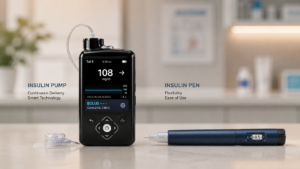
Insulin Pump vs Daily Injections: 7 Crucial Facts to Choose Right
Managing diabetes effectively requires finding a insulin delivery method that aligns with your daily routine, metabolic needs, and personal comfort. For decades, multiple daily injections (MDI) served as the standard treatment for insulin-dependent diabetes. However, modern technology has introduced advanced wearable devices that continuous delivery systems offer. Deciding between an insulin pump vs daily injections is one of the most significant choices you will make in your diabetes care journey.
At Asian Diabetes Center (https://asiandiabeticcenter.in), our expert care team led by Dr. Shalini Patlolla—a leading endocrinologist in Hyderabad—helps patients evaluate their lifestyle, glucose variability, and clinical goals to select the ideal treatment path. Understanding the core differences when comparing an insulin pump vs daily injections allows you to take control of your long-term health with confidence.
What Is Multiple Daily Injections (MDI)?
Multiple daily injections involve using an insulin pen or syringe to administer insulin manually throughout the day. This regimen typically consists of two main types of insulin:
-
Basal Insulin: Long-acting insulin injected once or twice daily to keep background blood sugar levels stable between meals and overnight.
-
Bolus Insulin: Rapid-acting insulin injected before meals or snacks to process carbohydrates and correct sudden high blood sugar spikes.
While MDI requires carrying insulin pens and needles everywhere you go, it remains a reliable, accessible, and straightforward routine for millions of people worldwide.
What Is an Insulin Pump?
An insulin pump is a small, computerized device—roughly the size of a pager or small smartphone—that delivers precise amounts of rapid-acting insulin 24 hours a day. The pump delivers insulin through a tiny flexible tube (cannula) inserted under the skin, which is replaced every 2 to 3 days.
Instead of requiring separate long-acting insulin, an insulin pump vs daily injections system uses only rapid-acting insulin delivered in two precise ways:
-
Basal Rates: Small, continuous doses infused continuously throughout the day and night to maintain baseline glucose stability.
-
Bolus Doses: On-demand doses programmed by the user (or calculated automatically by smart pumps connected to a Continuous Glucose Monitor) prior to eating.
For official medical guidelines on insulin delivery technologies, refer to the American Diabetes Association (https://diabetes.org) and detailed device evaluations on Mayo Clinic (https://www.mayoclinic.org).
Insulin Pump vs Daily Injections: 7 Crucial Factors to Compare
To determine whether an insulin pump vs daily injections approach is best suited for your daily life, consider these seven key clinical and lifestyle factors:
[Glycemic Control Needs] ➔ [Flexibility & Lifestyle] ➔ [Technology Comfort]
          |
          └─► Drives decision between continuous infusion vs manual injections.
1. Dosing Precision and Flexibility
When evaluating an insulin pump vs daily injections, precision is a primary advantage of pump therapy. Pumps can deliver micro-doses of insulin (as precise as 0.025 units), making them exceptional for individuals with high insulin sensitivity or unpredictable daily schedules. Injections, while effective, deliver fixed doses that offer less flexibility if a meal is delayed or skipped.
2. Number of Needle Sticks
One of the most noticeable differences in an insulin pump vs daily injections comparison is skin punctures:
-
Daily Injections: Requires 4 to 6 manual needle sticks every single day (over 1,500 injections per year).
-
Insulin Pump: Requires changing the infusion set under the skin once every 2 to 3 days (around 100 to 120 skin insertions per year).
3. Lifestyle and Spontaneity
An insulin pump vs daily injections setup drastically changes daily freedom. Pump users can adjust basal rates for spontaneous exercise or sleep-ins without fearing late-night hypoglycemia. MDI users must adhere strictly to injection timing and pre-planned meals because long-acting insulin is already active in their bloodstream.
4. Risk of Hypoglycemia (Low Blood Sugar)
Smart pumps—especially those paired with continuous glucose monitors (CGMs) in automated insulin delivery (AID) systems—can automatically suspend background insulin if blood sugar drops too fast. This significantly reduces nocturnal hypoglycemia compared to static daily injections.
5. Cost and Insurance Coverage
Comparing financial commitment for an insulin pump vs daily injections is vital:
-
Injections: Generally have lower upfront costs, as supplies consist mainly of insulin pens and disposable needles.
-
Pumps: Involve higher initial equipment costs and recurring monthly expenses for infusion sets, reservoirs, and sensors. Consulting a best diabetologist in Hyderabad helps navigate cost-effective treatment planning.
6. Physical Attachment and Convenience
Wearing a device 24/7 on your waistband or skin can feel intrusive for some patients. If you dislike having medical hardware attached to your body during sleep, contact sports, or swimming, multiple daily injections may feel more comfortable.
7. Learning Curve and Maintenance
Managing an insulin pump vs daily injections requires different levels of technical engagement. Pumps require technical troubleshooting, carb counting skills, and routine site rotations to prevent lipohypertrophy (fatty tissue build-up). MDI is simpler to learn and carries no risk of mechanical equipment failure.
Comparison Table: Insulin Pump vs Daily Injections
| Feature / Metric | Insulin Pump 📟 | Daily Injections (MDI) 💉 |
| Delivery Method | Continuous infusion via subcutaneous cannula | Manual injections via pen or syringe |
| Daily Injections Needed | 1 insertion every 2–3 days | 4 to 6 injections every single day |
| Dosing Precision | Extremely high (micro-dosing down to 0.025 units) | Fixed whole or half-unit increments |
| Hypoglycemia Protection | High (automatic suspension with CGM integration) | Manual monitoring and intervention required |
| Equipment Attachment | Worn continuously on the body 24/7 | No attached devices between injections |
| Cost Profile | Higher initial & ongoing supply investment | Lower initial cost, routine recurring supplies |
Overlapping Health Considerations: Thyroid and Foot Care
Comprehensive metabolic care goes beyond choosing between an insulin pump vs daily injections. Many individuals managing Type 1 or Type 2 diabetes also face coexisting conditions:
-
Thyroid Health: Autoimmune thyroid disease frequently coexists with Type 1 diabetes. Women experiencing unexplained weight fluctuations or severe fatigue should consult a thyroid specialist in Hyderabad or evaluate thyroid symptoms in women alongside their glucose management.
-
Preventative Foot Care: Regardless of whether you choose an insulin pump vs daily injections, maintaining blood glucose stability is the ultimate shield against diabetic neuropathy. Following basic diabetic foot care tips every day protects against numbness and severe foot ulcers.
If you are managing complex metabolic health, receiving guidance from a thyroid and diabetes specialist Hyderabad ensures all aspects of your endocrine system are monitored seamlessly.
When to Consult an Endocrinologist
Before making the transition in an insulin pump vs daily injections regimen, schedule a thorough assessment with a sugar specialist in Hyderabad or diabetes consultant. You should seek specialized advice if you experience:
-
Frequent, unexplained low blood sugar levels (hypoglycemia) at night
-
Severe blood sugar spikes after meals despite accurate dosing
-
Unpredictable work shifts, sports schedules, or frequent travel routines
-
Difficulty managing blood sugar during pregnancy requiring a gestational diabetes doctor Hyderabad
-
Interest in upgrading to automated diabetes technology for type 2 diabetes treatment Hyderabad
Make the Best Choice for Your Diabetes Journey
Whether you decide that an insulin pump vs daily injections approach best fits your lifestyle, consistency and expert medical partnership are key to achieving optimal HbA1c levels.
If you are looking for a trusted diabetes doctor near me Hyderabad or searching for the best endocrinologist in Madinaguda, Asian Diabetes Center is here to support you. Schedule your personalized assessment with Dr. Shalini Patlolla at Asian Diabetes Center (https://asiandiabeticcenter.in) today to explore the latest in diabetes management technology!