Diabetes

Diabetes, Thyroid

Thyroid Problems and Diabetes: 5 Critical Factors for Hyderabad Patients

Living with a chronic health condition requires structural discipline, but when you are diagnosed with both thyroid problems and diabetes simultaneously, your daily healthcare management framework changes completely. In India, and particularly across rapidly developing urban spaces like Hyderabad, the clinical coexistence of these two interconnected endocrine disorders is witnessing a massive spike. Because the thyroid gland regulates your body’s baseline systemic metabolism and diabetes alters how your cells process glucose, an uncalibrated imbalance in one directly triggers a chaotic domino effect in the other. For patients visiting the Asian Diabetes Center, navigating this overlapping metabolic landscape can feel overwhelming. However, understanding the deep operational link behind thyroid problems and diabetes is the first step toward reclaiming your energy, vitality, and metabolic stability. Let’s break down the hidden physiological links, explore how an underactive or overactive thyroid completely alters your insulin sensitivity, and outline how localized specialist care can streamline your treatment pathway. The Hidden Physiological Link Between Your Thyroid and Blood Sugar Clinical medical research consistently demonstrates that individuals diagnosed with diabetes face a significantly higher probability of developing a secondary thyroid disorder compared to the general population. According to global epidemiological data published in The National Institutes of Health (NIH) database, overlapping metabolic dysfunction requires careful clinical screening. This clinical crossover is not random coincidence; it is deeply rooted in the endocrine system’s delicate feedback loops. When managing thyroid problems and diabetes together, two primary medical pathways dictate their intersection: Shared Autoimmune Vulnerabilities: In patients with Type 1 Diabetes, the human immune system mistakenly targets and destroys insulin-producing pancreatic beta cells. This underlying genetic predisposition and autoimmune tendency frequently expands its field of attack over time, shifting to target the thyroid gland. This results in secondary autoimmune conditions like Hashimoto’s Thyroiditis (the root cause of hypothyroidism) or Graves’ Disease. When tracking thyroid problems and diabetes, catching this crossover early prevents compounding cellular damage. Metabolic Interdependence: Thyroid hormones are the primary gas pedal for global cellular energy. They directly influence how your liver synthesizes glucose, how fast your intestines absorb carbohydrates, and how effectively your peripheral muscle tissues utilize circulating insulin. When thyroid hormone levels drift outside their optimal baseline, your insulin sensitivity changes immediately, creating erratic, unexplained blood sugar fluctuations that make managing thyroid problems and diabetes a dynamic challenge. Hypothyroidism vs. Hyperthyroidism: How They Alter Diabetic Control The operational state of your thyroid dictates exactly how your body responds to your daily diabetic prescriptions, lifestyle habits, and underlying insulin profiles. If you are balancing thyroid problems and diabetes, it is vital to recognize which direction your thyroid is swinging to counter the shifts in your blood glucose readings. 1. Hypothyroidism (Underactive Thyroid) & Insulin Stabilization Challenges When you suffer from hypothyroidism, your global cellular metabolism slows down to a sluggish crawl. For a patient managing diabetes, this structural slowdown introduces serious clinical risks: Prolonged Insulin Half-Life: Because your metabolic clearance rate drops, injected insulin or oral anti-diabetic medications remain active in your bloodstream for a significantly longer duration than normal. This prolonged activity frequently causes sudden, dangerous crashes in blood sugar (severe hypoglycemia). Related Deep Dive: Managing overlapping prescriptions requires absolute precision. If your doctor has prescribed blood sugar management alongside thyroid hormone therapy, read our step-by-step patient blueprint on Can You Take Metformin and Thyroid Medication Together? 5 Best Habits. Compounded Insulin Resistance Symptoms: Hypothyroidism is notoriously tied to rapid, unexplained weight gain, systemic fluid retention, and elevated cholesterol levels. These physical alterations inherently worsen your systemic insulin resistance symptoms, meaning that while you might face sudden dips, your overall baseline blood sugar control becomes incredibly rigid and harder to lower over time. Overlapping Complications: The debilitating chronic fatigue, muscle weakness, and mental fog caused by an underactive thyroid often lead patients to skip physical exercise, further deranging their long-term HbA1c optimization plans while compounding the twin difficulties of managing thyroid problems and diabetes. 2. Hyperthyroidism (Overactive Thyroid) & Blood Sugar Spikes Conversely, if your thyroid gland goes into overdrive and produces an absolute excess of thyroid hormones, your metabolic functions accelerate into a hyper-metabolic state. To understand how your three-month blood sugar averages affect this metabolic crossover, check out our deep-dive guide explaining the HbA1c Normal Range India parameters. This introduces an entirely different set of diabetic management obstacles: Accelerated Hepatic Glucose Production: Hyperthyroidism triggers your liver to rapidly release stored glycogen back into the blood system as usable glucose. Rapid Intestinal Absorption: Your digestive tract speeds up, absorbing dietary carbohydrates at a drastically accelerated pace, leading to aggressive post-meal blood sugar spikes. Increased Insulin Clearance: While your body needs more insulin to combat the sudden surge of sugar, your hyper-metabolic liver and kidneys filter out and clear your diabetes medications at an accelerated rate. This combination leads to severe hyperglycemia (high blood sugar), often requiring prompt, aggressive dosage increases under strict medical supervision to prevent diabetic ketoacidosis (DKA). Comprehensive studies in The Lancet Diabetes & Endocrinology confirm that unmanaged thyroid spikes actively undermine standard diabetic pathways. Why Localized Endocrine Care Matters in Hyderabad Successfully managing overlapping metabolic conditions requires much more than just pulling generic treatment advice or medication adjustments off the internet. Factors completely unique to contemporary life in urban Telangana play an undeniable role in complicating your diagnostic charts. Rapidly shifting urban lifestyles, highly demanding workplace stress levels, and local dietary patterns that are inherently rich in high-glycemic carbohydrates routinely place an immense extra burden on your metabolic organs when trying to normalize thyroid problems and diabetes. Attempting to fix your blood sugar levels by simply increasing your insulin units without assessing your underlying hormonal profile is a massive mistake. This is why gaining access to comprehensive specialized evaluation is non-negotiable. Consulting an experienced, highly qualified endocrinologist in Kukatpally or scheduling a deep-dive diagnostic tracking session with an established thyroid specialist in Madinaguda ensures that your recovery blueprint accounts for your unique local lifestyle choices, stress parameters, and physical environment. Under the clinical guidance of experts like Dr. Shalini Patlolla, your

Blogs, Diabetes, Thyroid

1st Best Endocrinologist Near Me Kukatpally Hyderabad: Dr. Shalini Patlolla

Endocrinologist Care: Finding Expertise in Kukatpally Hyderabad When seeking specialized care for diabetes, thyroid, or other hormonal imbalances, finding a knowledgeable and experienced endocrinologist is crucial. Patients often search for the best endocrinologist near me Kukatpally Hyderabad to ensure they receive precise diagnosis and personalized management plans. Dr. Shalini Patlolla, with her extensive qualifications and patient-focused approach, provides comprehensive endocrine care in the Western Hyderabad region, including Kukatpally and Madinaguda. Best Endocrinologist Near Me Kukatpally Hyderabad — Dr. Shalini Patlolla — Hyderabad’s Trusted Endocrinology Specialist Dr. Shalini Patlolla is a highly qualified and respected endocrinologist dedicated to managing complex hormonal conditions. Her educational journey began with an MBBS from Gandhi Medical College, Hyderabad, followed by an MD in General Medicine from Osmania Medical College. She further specialized by achieving a DM in Endocrinology from SVIMS, Tirupati, where she secured the 1st Rank, demonstrating her exceptional grasp of the field. Before establishing her current practice, Dr. Patlolla served as a Consultant Endocrinologist at AIG Hospitals, Gachibowli, and a Visiting Consultant at KIMS Hospital, Kondapur, gaining valuable experience in diverse clinical settings. Her commitment to advancing medical knowledge is evident through her published peer-reviewed research on Polycystic Ovary Syndrome (PCOS) in the prestigious Gynecological Endocrinology journal. This background underpins her evidence-based approach to patient care. As the Founder and Chief Clinical Director of Asian Diabetes Thyroid Hormone Super Speciality Center, Dr. Shalini Patlolla offers dedicated services focused on endocrine health. She is notably the only prominent female endocrinologist operating across the extensive Moosapet-to-Lingampally medical corridor in Hyderabad, providing a unique and accessible option for patients seeking a female specialist for sensitive health concerns. Comprehensive Care from the Best Endocrinologist Near Me Kukatpally Hyderabad for Endocrine and Metabolic Health Dr. Shalini Patlolla and her team at Asian Diabetes Thyroid Hormone Super Speciality Center specialize in a broad spectrum of endocrine and metabolic disorders. Her expertise covers the clinical diagnosis and management of conditions that affect the body’s hormonal balance, aiming to improve patient well-being and long-term health outcomes. The center provides specialized care for: Clinical Endocrinology: Addressing various endocrine gland disorders, including pituitary, adrenal, parathyroid conditions, and neuro-endocrine tumors. Diabetology: Comprehensive management of Type 1 and Type 2 diabetes, including early diagnosis, insulin pump education, and prevention of complications. Advanced GLP-1 Receptor Agonist Therapy: Utilizing modern incretin-based therapies to help manage blood glucose levels and promote weight management for suitable diabetic patients. Continuous Glucose Monitoring (CGM) Implementation: Providing access to and guidance on CGM systems to offer real-time insights into glucose fluctuations, aiding in more precise diabetes management. Thyroid Ultrasound-Guided Evaluation: Expert assessment and diagnosis of thyroid nodules and other thyroid disorders using ultrasound guidance for accuracy and patient comfort. PCOS Metabolic Correction: Focused treatment plans for Polycystic Ovary Syndrome, addressing its metabolic aspects, hormonal imbalances, and related symptoms. Gestational Endocrine Care: Specialized management of endocrine conditions during pregnancy, including gestational diabetes and thyroid disorders, ensuring the health of both mother and child. Each patient receives a personalized treatment strategy based on their specific condition, medical history, and lifestyle, with an emphasis on education and empowerment. Clinical Approach: Best Endocrinologist Near Me Kukatpally Hyderabad at Asian Diabetes Thyroid Hormone Super Super Speciality Center At Asian Diabetes Thyroid Hormone Super Speciality Center, the clinical philosophy centers on accurate diagnosis, evidence-based treatment, and thorough patient education. Dr. Shalini Patlolla employs a meticulous approach, integrating advanced diagnostic tools with a deep understanding of endocrine physiology. This involves not only medication management but also comprehensive lifestyle counseling to support sustainable health improvements. The center focuses on leveraging modern technologies like Continuous Glucose Monitoring (CGM) systems. These devices provide patients and the clinical team with detailed glucose profiles, allowing for highly individualized adjustments to diet, exercise, and medication regimens. Furthermore, the practice offers modern incretin-based therapies, such as advanced GLP-1 receptor agonists, for appropriate candidates, which may help improve glycemic control and offer cardiovascular benefits. Patient education is a cornerstone of the center’s approach. Patients are guided through understanding their condition, the purpose of their medications, and the importance of lifestyle modifications. This collaborative model aims to ensure patients are active participants in their own health management, leading to better adherence and outcomes. For detailed information on diabetes, you may refer to resources from the official website of the Research Society for the Study of Diabetes in India. Serving Patients: Best Endocrinologist Near Me Kukatpally Hyderabad Across Kukatpally, Madinaguda and Western Hyderabad Dr. Shalini Patlolla’s Asian Diabetes Thyroid Hormone Super Speciality Center is strategically located to serve a wide patient base across Western Hyderabad. For those searching for an endocrinologist in Kukatpally, KPHB, JNTU, Miyapur, Nizampet, or Chandanagar, the Kukatpally center offers convenient access. Similarly, residents of Madinaguda, Lingampally, or Moosapet will find the Madinaguda center easily reachable. This dual-center approach ensures comprehensive endocrine care is within reach for many communities. The commitment to accessible and high-quality endocrine care extends throughout these bustling corridors, making it easier for individuals to receive timely and expert attention for conditions such as diabetes and thyroid disorders. If you are looking for a reliable diabetes specialist Western Hyderabad or specifically the best endocrinologist near me Kukatpally Hyderabad, Dr. Shalini Patlolla’s centers provide a dedicated option. Frequently Asked Questions What conditions does the Best Endocrinologist Near Me Kukatpally Hyderabad treat? An endocrinologist specializes in conditions related to hormones and glands. This includes diabetes mellitus (Type 1, Type 2, gestational), thyroid disorders (hypothyroidism, hyperthyroidism, thyroid nodules), parathyroid conditions, adrenal gland disorders, pituitary gland issues, Polycystic Ovary Syndrome (PCOS), and osteoporosis, among others. They help manage hormonal imbalances to restore the body’s natural functions. When should you consult a diabetes specialist from the Best Endocrinologist Near Me Kukatpally Hyderabad practice? If your blood sugar levels are consistently high despite primary care management, if you have complications related to diabetes, or if your diabetes type is complex (e.g., Type 1, gestational diabetes), consulting an endocrinologist is advisable. They can provide specialized treatment plans, introduce modern therapies like advanced GLP-1 receptor agonists, and implement technologies such

Mounjaro vs Ozempic
Blogs, Diabetes, Thyroid

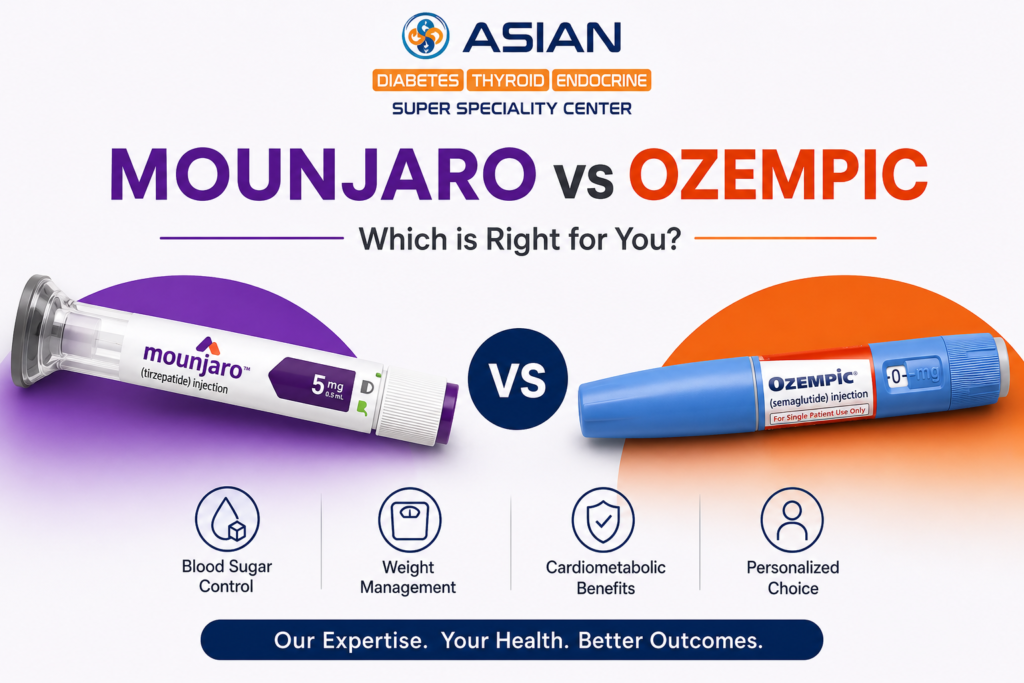
Mounjaro vs Ozempic: Which Weight Loss Injection is Right for You?

If you’ve been researching weight loss injections in India, you’ve probably come across two names everywhere: Mounjaro and Ozempic. Both belong to the GLP-1 class of medications, both require a weekly injection, and both can produce serious weight loss results. But they’re not the same drug, and picking the wrong one could mean slower progress or unnecessary side effects. Here’s what actually matters when comparing these two, based on clinical data and what we see in practice at Asian Diabetes Thyroid Hormone Super Specialty Center. KEY TAKEAWAYS Mounjaro (tirzepatide) targets two hormones (GIP + GLP-1), while Ozempic (semaglutide) targets only GLP-1. A JAMA Internal Medicine study found Mounjaro patients were 3x more likely to hit 15% weight loss than Ozempic patients. Mounjaro costs ₹14,000–₹17,500/month in India. Ozempic starts around ₹8,800/month. Side effects are similar for both, mainly nausea and stomach discomfort in the first few weeks. An endocrinologist should decide which one fits your medical profile. Self-prescribing either drug is risky. How Do They Actually Work? Both drugs mimic a gut hormone called GLP-1 that your body naturally releases after eating. This hormone tells your brain you’re full, slows down digestion, and helps regulate blood sugar. The difference? Mounjaro doesn’t stop at GLP-1. It also activates a second hormone receptor called GIP (glucose-dependent insulinotropic polypeptide). Think of Ozempic as working through one channel and Mounjaro working through two. That dual action is a big part of why Mounjaro tends to produce more weight loss in clinical settings. Ozempic (semaglutide) has been around longer and has stronger cardiovascular data behind it. If you have heart disease along with obesity or diabetes, that’s a factor your doctor will weigh carefully. Weight Loss Results: What the Studies Say Forget the marketing. Here’s what the research found. A real-world study published in JAMA Internal Medicine in 2024 analyzed health records of over 18,000 adults with overweight or obesity. The findings were clear: patients on tirzepatide (Mounjaro) were three times more likely to achieve 15% body weight loss compared to those on semaglutide (Ozempic). In clinical trials, the numbers break down roughly like this: Ozempic users lost an average of about 15% of their body weight over 68 weeks. Mounjaro users lost up to 21–22% of their body weight at the highest dose over 72 weeks. At the lowest dose (5 mg), average weight loss was around 15.4 kg. At the highest dose (15 mg), it was 21.8 kg. Those are averages. Individual results depend on your starting weight, diet, activity level, and whether you have conditions like insulin resistance, PCOS, or thyroid disorders that affect metabolism. Cost in India This is where things get practical. Both drugs are now available in India, and cost matters. Mounjaro launched in India in March 2025. It’s priced at ₹3,500 for a 2.5 mg vial and ₹4,375 for a 5 mg vial. Monthly cost ranges from ₹14,000 to ₹17,500 depending on your prescribed dose. That’s roughly one-fifth of what it costs in the US. Ozempic became officially available in India in December 2025. Monthly cost starts at ₹8,800 for the 0.25 mg dose and goes up to ₹11,175 for the 1 mg dose. Neither drug is covered by most Indian health insurance plans unless your doctor justifies it for diabetes management specifically. Worth checking with your insurer before starting. Side Effects: What to Expect The side effect profile is similar for both medications. Most patients experience some combination of: Nausea (especially in the first 2–4 weeks) Stomach discomfort or bloating Diarrhea or constipation Reduced appetite (this is partly how the drugs work) These side effects usually settle down as your body adjusts. Starting at a low dose and increasing gradually makes a big difference, which is why proper medical supervision matters. Serious side effects are rare but possible. Pancreatitis, gallbladder issues, and thyroid-related concerns have been reported in clinical trials for both drugs. Neither should be used if you have a personal or family history of medullary thyroid cancer. Who Should Take What? There’s no universal answer. The right choice depends on your specific medical situation. Mounjaro might be a better fit if: Your primary goal is significant weight loss (BMI 30+) You have type 2 diabetes along with obesity You haven’t responded well to other weight loss approaches You have PCOS-related weight gain or insulin resistance Ozempic might be a better fit if: You have established cardiovascular disease (the SELECT trial showed 20% fewer heart attacks and strokes) You need a more affordable monthly option Your weight loss goal is moderate You’re already on a diabetes management plan and need blood sugar control In many cases, an endocrinologist will start you on one and adjust based on how your body responds over the first 8–12 weeks. Why Medical Supervision Matters This part gets buried under the social media hype: these are prescription medications, not lifestyle products. Taking GLP-1 injections without proper evaluation can mask underlying conditions, create nutritional deficiencies, or cause complications that wouldn’t happen with proper monitoring. At Asian Diabetes Thyroid Hormone Super Specialty Center, Dr. Shalini Patlolla evaluates every patient’s hormone profile, thyroid function, insulin resistance levels, and overall metabolic health before recommending either Mounjaro or Ozempic. The dosing gets adjusted based on your response, not based on a generic protocol. If you’re considering weight loss injections, the first step isn’t choosing between Mounjaro and Ozempic. It’s getting a proper endocrine evaluation so the choice is based on your actual health data. So Which One Should You Pick? Both drugs work. That’s not the debate anymore. Mounjaro tends to produce more weight loss, while Ozempic has better cardiovascular outcome data and costs less per month. But neither replaces the basics — dietary changes, physical activity, and consistent medical follow-up still do the heavy lifting. Don’t pick a weight loss injection based on what worked for someone on Instagram. Get evaluated by an endocrinologist who can look at your bloodwork, your metabolic profile, and your medical history before making a recommendation.

Scroll to Top