7 Vital Tips for Retinopathy Screening Protecting Your Eyes
Diabetes affects millions of people worldwide, impacting blood sugar control, cardiovascular health, and nerve function. However, one of the most severe yet frequently overlooked complications of diabetes is visual impairment. Prioritizing retinopathy screening protecting your eyes is one of the single most crucial steps any individual living with Type 1 or Type 2 diabetes can take to safeguard their vision.
Diabetic retinopathy is a microvascular eye condition that damages the tiny blood vessels supplying the retina—the light-sensitive tissue lining the back of your eye. Because early retinal damage develops quietly without pain or immediate visual symptoms, regular retinopathy screening protecting your eyes serves as your primary defense against irreversible sight loss.
In this comprehensive guide, we will explore how high blood sugar impacts visual health, why retinopathy screening protecting your eyes is vital for early detection, the diagnostic tests involved, and proven lifestyle strategies to preserve your eyesight.
Prioritizing a regular diabetic retinopathy screening is one of the most proactive steps you can take for protecting your eyes from irreversible vision loss. Because early-stage retinal damage often develops without noticeable symptoms, routine retina checkups allow eye specialists to detect subtle microvascular changes before severe complications occur. By incorporating timely screenings into your ongoing healthcare routine, you effectively safeguard your visual acuity and reduce the long-term risk of diabetic eye disease.
What Is Diabetic Retinopathy?
To understand the necessity of retinopathy screening protecting your eyes, it helps to examine how diabetes alters eye anatomy.
The retina acts like the film in a traditional camera. It captures visual images and sends them through the optic nerve directly to the brain. To function efficiently, the retina relies on a dense network of microscopic blood vessels.
┌─────────────────────────────────────────────────────────────┐
│              STAGES OF DIABETIC RETINOPATHY                 │
├──────────────────────────────┬──────────────────────────────┤
│  1. Non-Proliferative (NPDR) │  2. Proliferative (PDR)      │
├──────────────────────────────┼──────────────────────────────┤
│ • Microaneurysms (bulges)    │ • Fragile new vessels grow   │
│ • Blood & fluid leakage      │ • Vitreous hemorrhage risk   │
│ • Retinal swelling (edema)   │ • Scar tissue & detachment   │
└──────────────────────────────┴──────────────────────────────┘
When blood glucose levels remain chronically elevated:
-
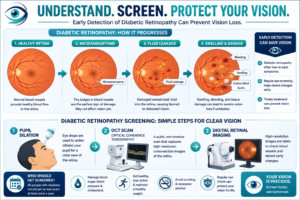
Vessel Walls Weaken: Microscopic blood vessels in the retina develop tiny bulges (microaneurysms) that leak fluid and blood into surrounding tissue.
-
Retinal Swelling: Fluid accumulation causes swelling in the macula—the center of the retina responsible for sharp, straight-ahead vision—leading to Diabetic Macular Edema (DME).
-
Abnormal Vessel Growth: As retinal blood supply drops, the eye attempts to grow new blood vessels. These delicate new vessels bleed easily, causing severe scarring or retinal detachment.
Because these changes occur long before you notice blurry vision, scheduling regular retinopathy screening protecting your eyes ensures early microvascular changes are caught and treated promptly.
7 Vital Reasons Why Retinopathy Screening Protecting Your Eyes Is Essential
1. Diabetic Retinopathy Is Completely Silent in Early Stages
In its initial stages (Non-Proliferative Diabetic Retinopathy), you will not feel pain, eye strain, or noticeable blurriness. By the time visual symptoms appear, structural damage may already be advanced. Consistent retinopathy screening protecting your eyes catches subtle microaneurysms long before vision declines.
2. Prevents Irreversible Vision Loss and Blindness
Diabetic retinopathy remains a leading cause of preventable blindness in working-age adults. Engaging in routine retinopathy screening protecting your eyes reduces the risk of severe vision loss by over 95% through early medical intervention.
3. Detects Diabetic Macular Edema (DME) Early
Diabetic Macular Edema can happen at any stage of retinopathy. Screening tools measure macular thickness down to the micrometer, allowing eye specialists to administer targeted therapies before central vision is compromised.
4. Evaluates Overall Systemic Vascular Health
The retina is the only place in the human body where live blood vessels can be visualized directly and non-invasively. Regular retinopathy screening protecting your eyes gives your medical team valuable insights into the health of your kidneys and cardiovascular system.
5. Standard Eye Exams Are Not Enough
A routine glasses prescription check or basic vision chart exam cannot inspect the back of your eye. Comprehensive retinopathy screening protecting your eyes uses specialized photographic equipment to examine retinal layers thoroughly.
6. Enables Modern Non-Invasive Treatments
When caught early via screening, retinal damage can often be stabilized using non-invasive laser therapy, anti-VEGF injections, or specialized eye drops, preventing the need for complex surgical procedures later.
7. Provides Peace of Mind for Long-Term Diabetes Management
Living with a chronic condition can be stressful. Knowing that you are actively prioritizing retinopathy screening protecting your eyes offers confidence and reassurance that your sight remains safe.
What Happens During a Retinopathy Screening?
Many patients delay eye exams out of fear or uncertainty. Understanding the screening process highlights how simple, painless, and vital retinopathy screening protecting your eyes truly is.
┌─────────────────────────────────────────────────────────────┐
│                 RETINOPATHY SCREENING PROCESS               │
├─────────────────────────────────────────────────────────────┤
│  [1] Dilating Drops ──► Relaxes pupil for wider view        │
│  [2] Digital Imaging ──► Captures high-res retinal photos   │
│  [3] OCT Scanning    ──► Measures cross-section thickness   │
│  [4] Expert Review   ──► Identifies micro-leaks early        │
└─────────────────────────────────────────────────────────────┘
-
Pupil Dilation: Specialized eye drops dilate (widen) your pupils, giving the eye specialist an unobstructed view of the retina.
-
Digital Retinal Photography: High-resolution cameras capture detailed images of your retinal blood vessels, macula, and optic nerve.
-
Optical Coherence Tomography (OCT): This non-invasive scan takes cross-sectional 3D images of your retina, measuring tissue thickness and detecting fluid accumulation.
-
Fluorescein Angiography (If Needed): A harmless diagnostic dye is injected into your arm to highlight active blood vessel leaks on camera images.
The screening takes under 30 minutes, and the diagnostic clarity gained makes retinopathy screening protecting your eyes an irreplaceable part of annual diabetes care.
Screening Timelines: How Often Should You Get Screened?
Establishing the correct exam schedule depends on your diabetes classification:
| Diabetes Type | Initial Screening Timeline | Follow-Up Frequency |
| Type 1 Diabetes | Within 5 years of diagnosis | Annually |
| Type 2 Diabetes | Immediately upon diagnosis | Annually (or as advised) |
| Pregnancy with Diabetes | Prior to conception / 1st Trimester | Every trimester |
Because Type 2 diabetes can develop silently years before formal diagnosis, undergoing retinopathy screening protecting your eyes right at diagnosis is vital to check for existing microvascular strain.
5 Practical Steps to Protect Your Eyesight Alongside Screening
While annual retinopathy screening protecting your eyes ensures early diagnosis, daily health management keeps your retinal blood vessels healthy:
-
Maintain Target HbA1c Levels: Keeping your average blood sugar levels (HbA1c) consistently under 7.0% reduces the risk of developing retinopathy by up to 76%.
-
Keep Blood Pressure Under Control: High blood pressure strains fragile retinal vessel walls. Target blood pressure readings below 130/80 mmHg to protect micro-circulation.
-
Manage Cholesterol Levels: High LDL cholesterol causes lipid deposits (hard exudates) to form inside the retina, increasing the risk of macular swelling.
-
Quit Smoking Immediately: Tobacco toxins constrict blood vessels and reduce oxygen supply to the retina, accelerating diabetic eye damage.
-
Watch for Warning Symptoms: Contact an eye care professional immediately if you experience sudden floaters, dark spots, blurry vision, or difficulty reading.
Frequently Asked Questions
Is retinopathy screening protecting your eyes painful?
No. Screening tests are completely non-invasive and painless. Dilating drops may cause mild sensitivity to light for a few hours, but the examination itself causes no discomfort.
Can diabetic retinopathy be reversed?
In early stages, controlling blood sugar and blood pressure can halt progression and allow mild vessel damage to stabilize. Advanced stages can be managed effectively to prevent further vision loss, making early retinopathy screening protecting your eyes essential.
Why do I need screening if my vision feels 20/20?
Diabetic retinopathy damages peripheral retinal areas first without affecting central vision. You can have clear 20/20 vision while micro-leaks are actively forming, which is why routine retinopathy screening protecting your eyes is necessary regardless of visual clarity.
Final Thoughts
Your eyesight is one of your most valuable assets. By pairing daily glycemic control with annual retinopathy screening protecting your eyes, you take active ownership of your visual health and ensure a clear, healthy future.
Schedule your comprehensive diabetic eye examination today and protect your vision for years to come.
Consistently scheduling retinopathy screening protecting your eyes ensures that any signs of swelling, leaky blood vessels, or abnormal tissue growth are identified and treated promptly. Combining professional annual dilated eye exams with steady blood sugar management provides a comprehensive defense against conditions like proliferative retinopathy and macular edema. Taking action early not only preserves your sight but also empowers you to maintain your quality of life for years to come.