
7 Unspoken Reasons Why Asians face High Diabetes Risk at Lower BMI
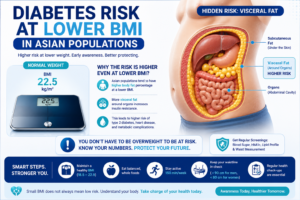
The relationship between body mass index (BMI) and Type 2 diabetes isn’t identical for everyone across the globe. For years, standard health guidelines suggested that diabetes was primarily a concern for individuals classified as medically overweight or obese with a BMI of 25 or higher. However, modern medical research reveals a startling reality: Asian populations develop metabolic diseases, insulin resistance, and Type 2 diabetes at significantly lower BMI levels than Caucasians.
Understanding why Asians face high diabetes risk at lower BMI levels has become a top priority in global metabolic research. For years, standard medical guidelines assumed that Type 2 diabetes primarily affected individuals with a Body Mass Index (BMI) of 25 or higher. However, recent clinical studies reveal a concerning reality regarding why Asians face high diabetes risk at lower BMI values compared to Western populations.
Even with a normal body weight, metabolic dysfunction can quietly develop. When analyzing why Asians face high diabetes risk at lower BMI metrics, researchers point to body composition differences, visceral fat storage, and genetic factors rather than total body weight alone.
What Is the “Thin-Fat” Phenotype?
To understand why Asians face high diabetes risk at lower BMI, one must first explore the concept known as the “TOFI” profile—Thin Outside, Fat Inside.
┌─────────────────────────────────────────────────────────────┐
│                   THE "THIN-FAT" PHENOTYPE                  │
├──────────────────────────────┬──────────────────────────────┤
│    Standard External View    │    Internal Metabolic View   │
├──────────────────────────────┼──────────────────────────────┤
│ • Normal Weight / Low BMI    │ • High Visceral / Deep Fat   │
│ • Slender Arms & Legs        │ • Low Skeletal Muscle Mass   │
│ • Looks Healthy Outside      │ • Fatty Liver & Ectopic Fat  │
└──────────────────────────────┴──────────────────────────────┘
A person can appear lean and fit on the outside while harboring dangerous levels of visceral fat around internal organs. Standard BMI calculations only measure overall weight relative to height; they do not distinguish between muscle mass and fat distribution.
Many Asian individuals present with lower overall body weight but possess a higher percentage of body fat and lower lean skeletal muscle mass compared to non-Asian individuals of the same weight. This metabolic structure makes standard BMI measurements dangerously misleading.
A major factor explaining why Asians face high diabetes risk at lower BMI is the “TOFI” profile (Thin Outside, Fat Inside). Individuals with this phenotype may look lean externally, but internal organ fat creates metabolic strain. This structural difference is a primary reason why Asians face high diabetes risk at lower BMI thresholds despite appearing healthy on standard weight scales.
7 Core Factors Driving Diabetes at Lower BMI in Asians
1. Visceral Fat vs. Subcutaneous Fat
Not all body fat behaves equally. Subcutaneous fat sits directly beneath the skin and is relatively harmless metabolically. Visceral fat, on the other hand, wraps around vital internal organs like the liver, pancreas, and intestines.
Asian populations are genetically predisposed to store fat viscerally rather than subcutaneously. Visceral fat produces inflammatory proteins and free fatty acids that impair the body’s response to insulin, creating high metabolic risk even in individuals who seem slender.
2. Lower Safe Fat Storage Capacity
Think of your body’s safe fat storage as a parking garage. In many Caucasian bodies, the subcutaneous “garage” is larger, meaning extra weight can be stored safely under the skin for longer periods.
In Asian bodies, this safe subcutaneous space fills up much faster. Once this capacity is exceeded—even at a low overall body weight—the excess fat overflows into organs where it doesn’t belong. This process, called ectopic fat deposition, directly disrupts normal pancreatic and liver function.
3. Lower Skeletal Muscle Mass
Skeletal muscle acts as the body’s primary sink for glucose. When you eat carbohydrates, your muscles absorb the resulting blood sugar to use as energy.
On average, Asian individuals tend to have less skeletal muscle mass compared to individuals of other ethnic backgrounds of similar height and weight. With fewer and smaller muscle units available to soak up blood sugar, glucose remains in the bloodstream longer, forcing the pancreas to produce more insulin.
4. Pancreatic Beta-Cell Hyper-Secretion and Burnout
Recent studies highlight that South Asian and East Asian individuals often exhibit early pancreatic beta-cell overactivity. The pancreas hyper-secretes insulin early in life to compensate for underlying insulin resistance.
[ Insulin Resistance ] ──► [ Pancreas Overworks ] ──► [ Beta-Cell Burnout ] ──► [ Early Diabetes ]
Over time, this constant strain causes the insulin-producing beta cells in the pancreas to exhaust themselves and burn out earlier than seen in other ethnic groups. This explains why diabetes can manifest rapidly even without significant weight gain.
5. Genetic Susceptibility and Gene Variants
Genetics play a foundational role in how our bodies manage metabolism. Recent genomic studies have identified specific genetic markers common in Asian populations that alter lipid metabolism and insulin signaling pathways.
These genetic variations mean that even slight increases in body fat trigger sharper rises in insulin resistance compared to other populations.
6. Dietary Patterns and High-Glycemic Carbs
Traditional and modern Asian diets frequently center on high-glycemic refined carbohydrates, such as polished white rice and refined flour flatbreads.
-
White Rice: Causes rapid spikes in blood sugar levels.
-
Refined Flour: Digest quickly, prompting sudden surges in insulin demand.
-
Ultra-Processed Foods: Modern urban lifestyle shifts have added sugary beverages and processed oils, compounding genetic vulnerabilities.
Repeated blood sugar spikes from refined carbohydrates keep insulin levels elevated, accelerating fat accumulation inside internal organs.
7. Rapid Urbanization and Reduced Daily Movement
Over recent decades, rapid urbanization across Asia has transformed daily living habits. Physical labor and walking have largely been replaced by sedentary office work, motorized transport, and screen time.
When sedentary habits meet a genetic profile already vulnerable to storing visceral fat, the risk of developing Type 2 diabetes rises steeply—even among individuals who maintain a normal weight on standard BMI charts.
Exploring why Asians face high diabetes risk at lower BMI requires examining how body fat is stored internally. While subcutaneous fat sits safely under the skin, visceral fat wraps around organs like the liver and pancreas, causing early insulin resistance. This biological pattern explains why Asians face high diabetes risk at lower BMI classifications even without significant weight gain.
Revised BMI Standards for Asian Populations
Because of these clear anatomical differences, major health organizations—including the World Health Organization (WHO)—have established modified, ethnic-specific BMI guidelines for Asian adults.
| Category | Standard Global BMI Cutoff | Revised Asian BMI Cutoff | Health Risk Level |
| Underweight | < 18.5 | < 18.5 | Low (Risk of other issues) |
| Normal Range | 18.5 – 24.9 | 18.5 – 22.9 | Average / Low |
| Overweight / At Risk | 25.0 – 29.9 | 23.0 – 27.4 | Elevated |
| Obese | ≥ 30.0 | ≥ 27.5 | High to Very High |
Under these updated metrics, an Asian individual with a BMI of 23.5 is already considered overweight and at increased risk for metabolic complications like Type 2 diabetes and cardiovascular disease.
Recognizing why Asians face high diabetes risk at lower BMI ranges led health organizations to create ethnic-specific BMI charts. Under these updated guidelines, an Asian adult with a BMI of 23.0 is already classified as at-risk. Understanding why Asians face high diabetes risk at lower BMI helps individuals take proactive steps long before reaching traditional obesity limits.
Beyond BMI: Better Metrics to Assess Your Diabetes Risk
Relying solely on BMI can create a false sense of security. To accurately measure metabolic risk, medical professionals recommend incorporating these complementary evaluations:
┌─────────────────────────────────────────────────────────────┐
│                 METABOLIC HEALTH CHECKLIST                  │
├─────────────────────────────────────────────────────────────┤
│  [ ] Waist Circumference (<90cm for men, <80cm for women)   │
│  [ ] Waist-to-Height Ratio (Keep under 0.5)                 │
│  [ ] Fasting Blood Glucose & HbA1c Levels                   │
│  [ ] Fasting Insulin & Lipid Panel                          │
└─────────────────────────────────────────────────────────────┘
-
Waist Circumference: Measures central obesity directly. Recommended limits for Asian populations are < 90 cm (35 inches) for men and < 80 cm (31 inches) for women.
-
Waist-to-Height Ratio (WHtR): Keep your waist measurement to less than half your height (ratio < 0.5).
-
Fasting Blood Glucose & HbA1c Tests: Provides a clear view of how effectively your body manages glucose over time.
-
Fasting Insulin Test: Detects early insulin resistance long before fasting blood sugar levels begin to rise.
For more details on managing blood glucose levels naturally, check out our guide on incorporating whole grains into a balanced diet or consult with an endocrinologist for a personalized health evaluation. You can also refer to official resources like the World Health Organization Guidelines for international metabolic health standards.
5 Practical Steps to Reduce Diabetes Risk at Any Weight
While genetics cannot be altered, lifestyle strategies can significantly lower visceral fat and dramatically improve insulin sensitivity.
-
Prioritize Resistance Training: Building lean muscle mass creates a larger glucose sink, allowing your body to process blood sugar efficiently. Aim for weightlifting, bodyweight exercises, or resistance bands at least 2–3 times a week.
-
Take Light Post-Meal Walks: Engaging in 10 to 15 minutes of light walking immediately after meals helps muscles absorb blood sugar without requiring extra insulin.
-
Rebalance Carbohydrates with Fiber: Swap refined carbohydrates like white rice and white flour for high-fiber alternatives such as quinoa, millets, brown rice, and legumes.
-
Increase Protein Intake: Adequate dietary protein supports muscle growth, increases satiety, and stabilizes blood sugar curves after eating.
-
Screen Early and Regularly: Do not wait until you reach a higher weight or experience noticeable symptoms. Asian adults should start regular metabolic screening—including HbA1c and lipid profiles—by age 23 to 25, especially if there is a family history of diabetes.
Frequently Asked Questions
Why do Asians get diabetes at lower weights than Caucasians?
Asians tend to carry higher percentages of visceral (internal) fat and lower muscle mass at the same body weight compared to Caucasians. Visceral fat causes insulin resistance, increasing diabetes risk even at a normal weight.
What is considered a healthy BMI for Asian adults?
For Asian populations, a normal and healthy BMI ranges between 18.5 and 22.9. A BMI of 23.0 or higher indicates elevated health risk.
Can a lean Asian person still have high blood sugar?
Yes. Lean individuals can have a “thin-fat” phenotype (TOFI), where visceral fat accumulates around internal organs, impairing insulin performance despite a normal appearance.
Final Thoughts
In conclusion, understanding why Asians face high diabetes risk at lower BMI numbers allows for earlier detection and better prevention. By focusing on muscle mass, waist circumference, and low-GI nutrition, you can protect your metabolic health regardless of your weight scale reading.
By monitoring waist measurements, prioritizing strength training, refining carbohydrate choices, and scheduling regular health checks, you can proactively protect your health regardless of your weight.